
What does land clearing cost? It depends on your land. Small brush is less work than big trees, so it costs less. Pulling stumps is more work than leaving them, so it costs more.
Hauling the wood away costs more than leaving the chips. We walk the land and write your price. There is no price list, because two lots on one road can be different jobs.
This page supports our Mayflower land clearing page. That work is in Mayflower and Conway. That page does not list a price either. Your number still comes from the walk.
What changes the price
Seven things change what you pay. You cannot tell any of them from the road.
- How thick the brush and trees are
- How big the trees are
- Whether the stumps stay or come out
- Whether the wood stays or gets hauled away
- How the machines get in
- Wet ground, hills, and standing water
- Permits, and how finished you need the land
We can write one price for the whole job. We can also write the price by the acre. Either way, the number comes from the visit, not from a photo.
Call (501) 269-6860, Monday through Friday, from 8:00 to 5:00. You can also email growfullyllc@gmail.com. Tell us if this is a lot, a fence line, or the spot for a building. We set the walk from that.
On this page
- Why we will not guess the price
- How long one acre takes
- What one tree costs
- Stumps, chips, and the finish
- Getting the machines in
- Permits, in plain words
- How to compare two prices
- What to have ready for the walk
Why we will not guess the price
A price over the phone is a guess. We have to see the trees, the leftover wood, and the finish you need.
David walks the land. He writes the price on that visit. We do not send a machine because of a photo on a phone.
He notes pine, harder trees such as oak, and trees too big to grind up. Thick woods are more work than open brush. The written price names what it covers.
Trees you want to keep get marked before a machine starts. House trees and trees along a line get flagged with you or your builder. Unmarked trees inside the priced area come out.
A tree you want saved is not a last-minute choice. If it has to stay, it is marked at the start. The crew follows those marks.
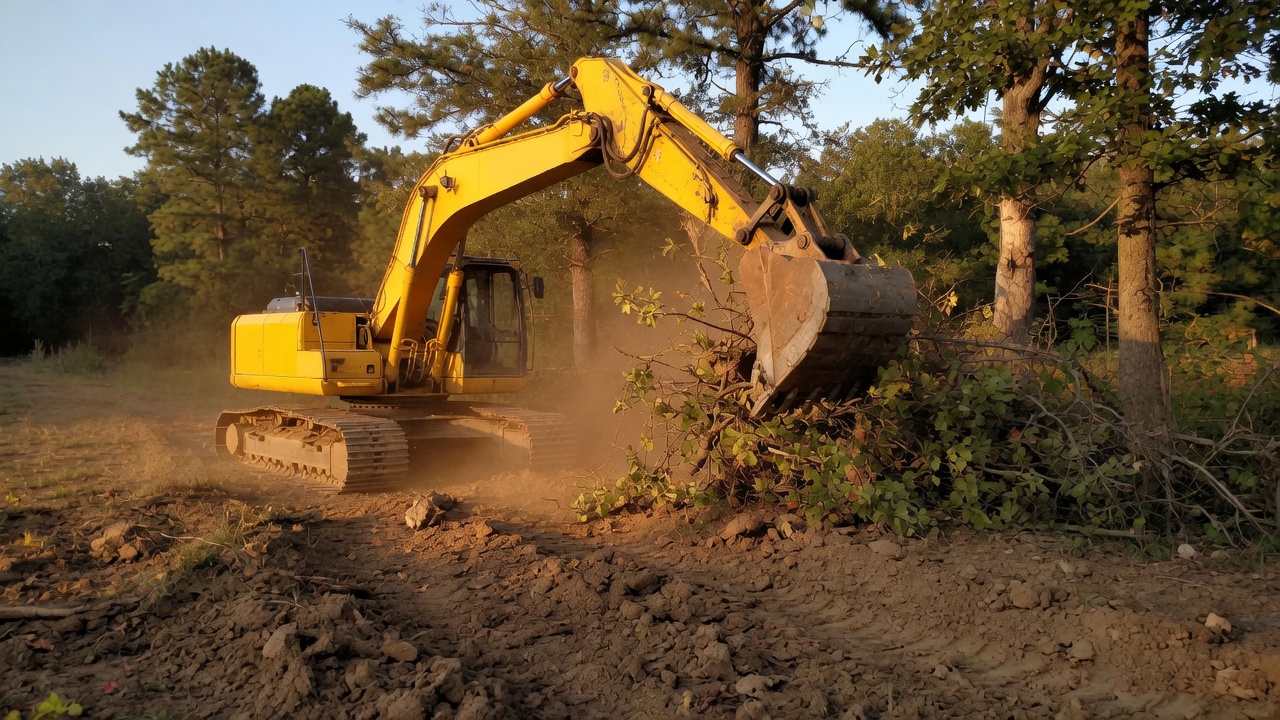
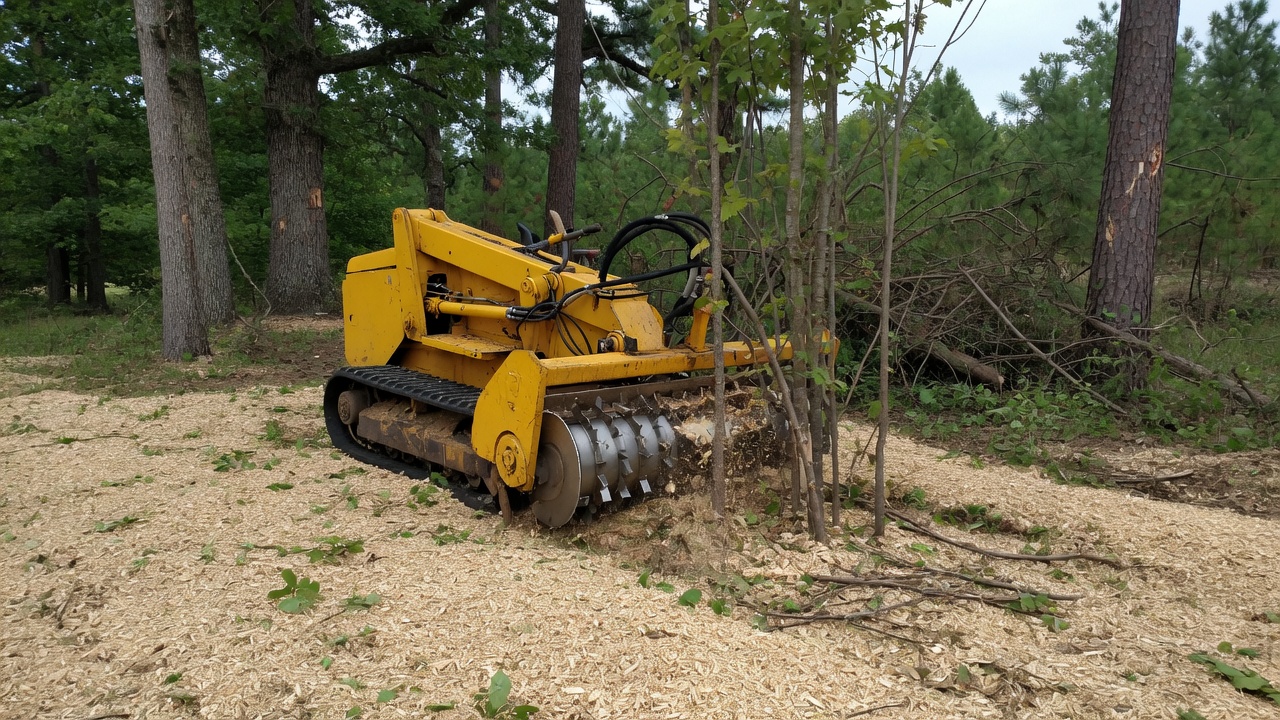
The way we clear is part of the price. A mulcher grinds brush and small trees and leaves the roots in the ground. An excavator can pull the stump and the roots so you can build on flat, clean ground.
Hauling the wood away is the choice when you do not want a layer of chips. The price names which result you are buying. Those results are not the same price, and they do not leave the same ground.
You can clear only the building spot and the driveway. The rest of the woods can stay. That is still land clearing when the stumps in the priced area come out.
A fence line is a strip, not the whole property. We can open that strip. If the stumps in the strip have to come out, the price says so.
A trail can keep a layer of chips. The spot for a building cannot. Keeping some trees takes more care, and it takes longer. The price should say that before a crew is sent.
How long one acre takes
People ask how long it takes to clear one acre. We do not print hours per acre. We do not print days per acre. The trees, the wood, and the way in all change the day.
Open brush with small trees is a shorter day than mixed oak and pine. Big stumps need an excavator, not only a mulcher. Scattered trees are not the same day as thick woods.
Wet ground can mean we wait for a drier day. A heavy machine on soaked dirt can cut ruts. The visit tells us whether to wait.
The schedule is written with the price. It is not a speed we post ahead of time. If someone promises a set number of days from a photo, ask which trees they counted on.
What one tree costs
People also ask what it costs to cut down one tall tree. One tree is not the same job as clearing land. We do not keep a posted price for one tree.
If that is the job, say so when you call. We still look before we write a number. The look tells us the size, the room to drop it, and where the wood goes.
Clearing land is the work on our land clearing page. One tree in a yard is a smaller job. Tell us which tree, so we do not price the whole property by mistake.
Stumps, chips, and the finish
The leftover wood is decided on the same walk. Chips can stay on the ground. Wood can be piled. It can be hauled away.
The price names which one you are buying. Hauling is its own line when the chips cannot stay. Dirt and roots we dig up need a place to stack, or they have to leave.
Those lines are not hidden inside one pass with the mulcher. If the chips stay, say so. If they have to leave, say that too. A price that skips that choice is hard to compare.
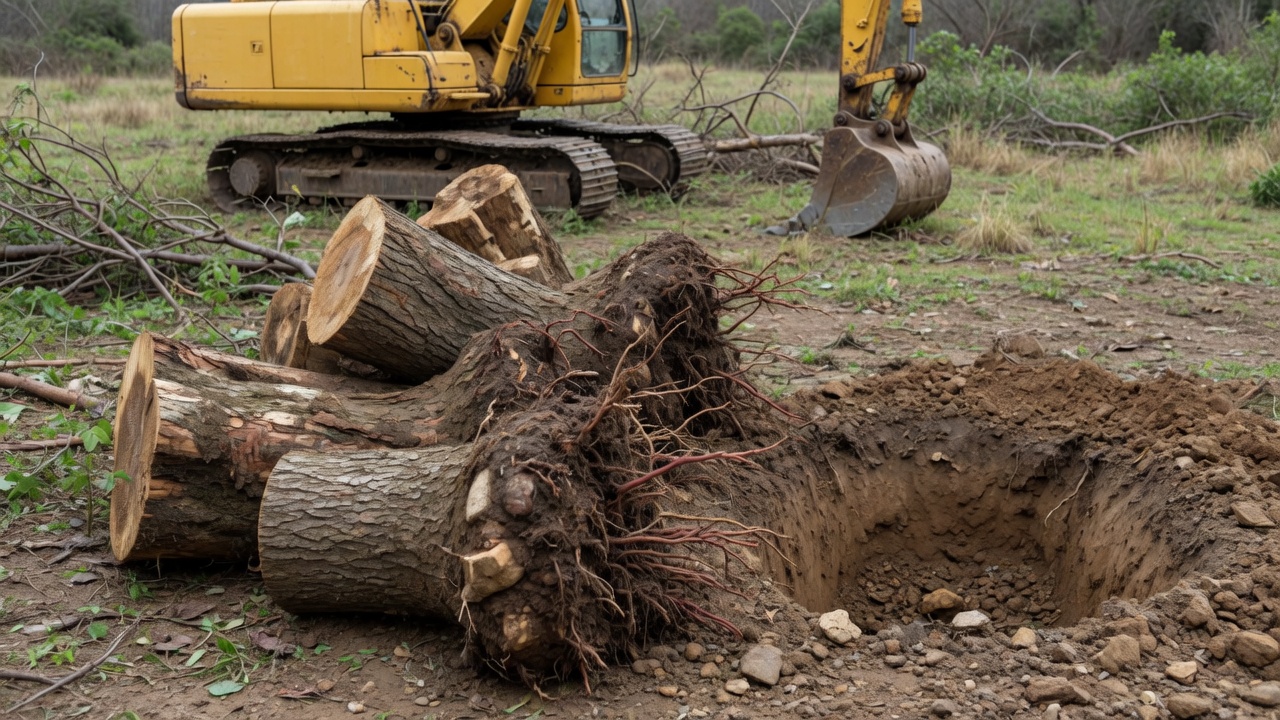
Stumps follow the next job. A concrete slab needs them out. A trail might leave them. If your builder needs them gone, pulling them is part of the price.
Roots left under the spot for a building should not surprise you at the end. If the next crew will shape the dirt, the note says where our clearing stops. That stopping point is written down.
The finish is part of the price. Cleared can mean the trees are down and the ground is still rough. It can mean the roots are out and rain can leave the site. The price names which finish you bought.
If the next step is a slab, roots left behind become a second job. We name the method so you buy the right one the first time.
Getting the machines in
The walk checks the entrance and the path in. A narrow gate, a ditch, or soft ground gets noted then. The price names how the machines get there.
If a gate or a ditch blocks the machine, opening the way in is its own line. We do not add an extra strip for free. The strip in the price is the strip we cut.
If the whole property is not in the price, the driveway and the building spot come first. That limit is written down. Work past the limit is a new line.
We look at the dirt the machines will cross. Standing water and hills get noted on that visit. If bare dirt needs protection so it does not wash away, that work is named in the price.
We do not guess the dirt from the road. Bring a note about the dirt if you already have one. If you do not, the walk still happens. We will not make up a dirt report.
Permits, in plain words
A permit depends on the land. We do not print a permit fee on this page. We do not file those papers from the truck.
If the work tears up one acre or more, the state can require a plan for rain running off the bare dirt. A smaller patch can still count when it is part of a bigger build. The Arkansas DEQ page on construction stormwater permits explains that rule.
The price says whether that paperwork is part of the job. Your city or county may add its own step. We note what the site needs after the walk. We do not list every office on this page.
Burning a pile later is your choice. We do not assume it, and we do not price burn rules here. Ask on the walk if a pile is even allowed on your land.
How to compare two prices
A lower price with nothing written under it is hard to trust. A price that lists what it includes can sit next to another price. Ask both crews the same questions.
Mark the edges of the clearing on a photo from above. The price should name those edges. Say where the wood goes. Ask for chips that stay, and for hauling, as separate lines.
Say whether the roots come out. Say what happens to the holes. Say whether the finish is rough, or shaped so water leaves.
Ask what happens if we find rock or bad dirt. Ask who gets the permits. Ask who watches the dirt so it does not wash off the site.
Then the two numbers mean something. Our written price still comes from the walk. We will not match a number for land we have not seen.
What to have ready for the walk
You do not need a timber report. David can walk the land with the papers you already have. A report helps if you already own one. We do not require it.
Bring a survey or stakes the builder already set. Mark where the house, the shop, the driveway, or the road should sit. Bring a note about the dirt, or the builder’s plan, if you have one.
Tell us where dirt and wood can be stacked, or that they must leave. Tell us about power lines, wells, septic lines, and fences you know about. Tell us the date the next crew needs the ground.
That keeps the walk on your job. We are not pricing some average acre. We are pricing the ground you need opened.
The call sets the walk. It does not set the price. Tell us the size if you know it, and when the next crew needs the ground. We will tell you what to have on site.
Call (501) 269-6860 on a weekday, from 8:00 to 5:00. Or email growfullyllc@gmail.com. We write the number after we walk the land.